Several months ago, we published an article titled, “Think Your Business Won’t Benefit from New Tech? Think Again“. In it, we covered some ways that tech can help us save time, money and improve efficiency.
To that end, we soon had the chance to talk to an innovative company by the name of ScreenScape. They’ve been around for over the past decade providing solutions for digital signage and menu boards. Now you might be wondering, just what is digital signage and why should I care?
Well, we hope this interview clears up those questions!
What is the major difference between traditional and digital signage that not many people know about?
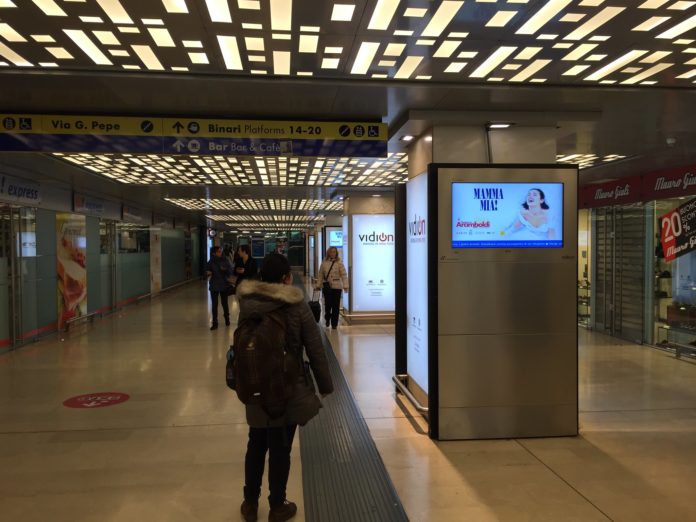
Today’s form of “connected” digital signage is much more powerful than static signage ever was. Digital signs are dynamic and easy to manage as part of a network. In fact a digital signage network may be comprised of dozens, or even hundreds of screens that can, at the same time, be managed independently or as a group.
Unlike conventional signage, digital signage can display rich animated digital content that is data driven and ever changing. Because digital signs are powered by computers, and you can publish content to them via the Internet.
Any given sign in a digital signage network can be customized to display information that is tailored to meet the needs of a very specific local audience. Having these messages placed strategically inside a place of business, such as next to the point-of-sale inside a retail store, poses obvious advantages for effective communication. It allows you, wherever you are, to make sure that customers visiting a specific location are treated to the right message at the right place and time.
Let’s compare why Digital Signage is a significant step up from conventional signage:
- Operational Cost
Traditional: Ongoing operational costs are high due to reprinting, shipping and care.
Digital: There is an initial upfront cost but long term operational costs can be significantly lower than traditional signage. - Fresh Content
Traditional: Content needs to be printed, then physically installed onsite (spelling mistakes will cost you!)
Digital: Content can be pushed to your entire network, anywhere in the world, in real-time, right from your browser. Content can be updated anytime and as often as required. - Supported Content
Traditional: Displays only one, static image.
Digital: Displays multiple pieces of content at the same time including videos, images, current news and weather, online streaming content, etc. - Technology Integration
Traditional: Standalone, no integration
Digital: Can integrate with other technologies like point of sale systems or Wayfinding to create an awesome viewer experience.
Are there any exciting trends or technology developments coming up?
The traditional digital signage industry grew out of the Professional Audio/Visual (Pro AV) industry. The primary value-add of a traditional digital signage vendor has been in setting up screens, and offering professional services to operate and manage a physical digital signage network.
An exciting trend in digital signage today is that more and more networks are being developed using Internet-based software. Equipment costs are dropping at a rapid pace. Large format display screens are popping up everywhere. Wireless networks are now commonplace in most businesses. These are the physical infrastructure components that are necessary for most businesses to participate in a digital signage network, and they are now mostly in place.
This gives rise to the opportunity for Internet-savvy businesses to “connect the dots” – to connect screens to a common software platform that unifies and simplifies the process of creating an Internet of screens. Where traditional networks used to be very capital intensive to build and complex to own and operate….the new “online” brand of digital signage network has the benefit of having these infrastructure components already in place. With much of the physical layer already in place progressive firms like ScreenScape can focus on connecting screens and delivering robust content creation and publishing tools with powerful software. The newer technology is more cost-effective and less complex, which means it’s easier for businesses of all shapes and sizes to participate. It’s easier for networks to grow and prosper leading to a network effect that helps to accelerate the proliferation of even more network growth.
What is the most important thing businesses need to know about digital signage?
Digital signage networks are evolving quickly, not unlike websites did in the late 1990s. Instead of thinking of a digital signage network as a discrete technical project that you outsource to a partner they are becoming fully integrated inside the enterprise and across the value chain. They help to create a customer-centric point-of-sale network that connects retailers, distributors, brands and suppliers, and many other stakeholders, to real customers inside real world venues, in real time. This makes owning and operating a digital signage network a strategic initiative for most industries. A land grab is happening to determine who owns the conduit to the retail customers. Those who own the conduit will call the shots. Industry partners that might want to participate in the onscreen messaging at retail will have to go through the gatekeeper to enjoy mindshare inside the places where buying decisions are made.
Which do you see evolving more in this space, software or hardware?
With the physical components slowly but surely falling into place, the digital signage industry will be dominated by savvy software companies. In time digital signage will become another form of online marketing, however, because the screens are strategically located to engage with customers in the right place at the right time they will be a very special kind of online marketing network – where online and offline intersect.
What other features does your software provide?
The most complete explanation of our digital signage software is available on our site but let’s highlight a couple key features:
Superior Aesthetics
The playback experience combined with our professionally designed layouts & themes means great results. You’ll spend less time and get better looking signage with our system.
Superior Ease of Use
We offer an industry leading, sleek HTML5 user interface.
Our templates are powerful on their own yet entirely flexible.
Superior Manageability
1-2-3 device setup process. We make it as easy as possible to have your signage up and running quickly.
Built-in device management means you can manage your hardware from right in the software interface.
More for Less – Lowest Total Cost of Ownership in the Industry
Professionally designed templates
Free software accounts
Use any TV, any Network
No hidden costs
Collaboration & Control
Our system offers elegant separation of concerns between Media, Playlists, Hardware to allow for a range of workflow models to support any organization.
And with that, that wraps up our interview with the team at ScreenScape. If you have any questions or thoughts feel free to leave a comment!